What happens when experienced practitioners need greater flexibility at this stage of life, but still have so much to contribute?
For Kampong Kapor Community Services (KKCS), this question sparked a journey to rethink how work is designed, so that experienced practitioners can continue supporting families, sharing their expertise and nurturing the next generation of social service professionals.
Over the past year, we took part in the Alliance for Action on Empowering Multi-Stage Careers for Mature Workers (AfA-EMW), under its Alternative Employment Models workstream. Alongside other organisations, we explored how jobs and work arrangements could be redesigned to create more age-friendly and sustainable opportunities for mature workers.
Those learnings recently took centre stage at the Tripartite Workgroup on Senior Employment (TWG-SE) Report Launch Conference 2026, which unveiled the report and resource guide capturing the initiative’s collective insights. Employers, partners and stakeholders came together to chart the future of senior employment and age-friendly workplaces in Singapore. Representing KKCS was our Chairman, Mr Evan Law Yew Kwong, who stood alongside industry leaders and partners in championing a shared vision of meaningful opportunities for mature workers.
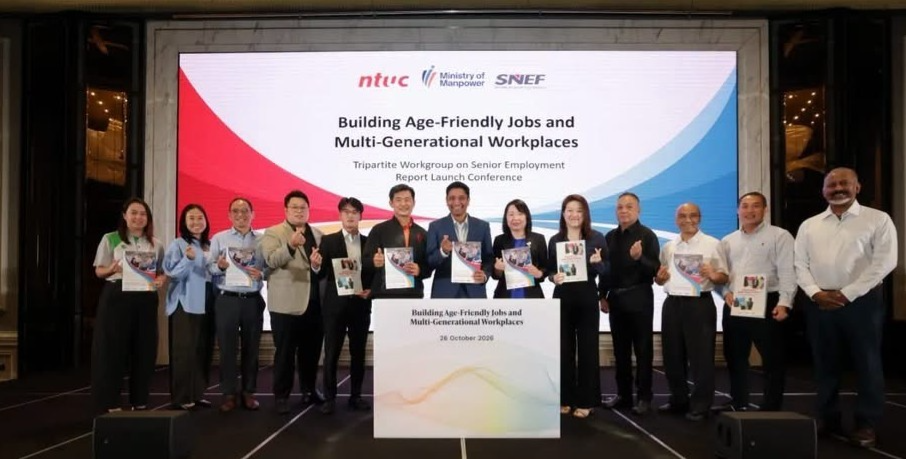
KKCS Chairman Mr Evan Law Yew Kwong (2nd from right) joining industry leaders and partners at the TWG-SE Report Launch Conference 2026.
Looking Beyond Flexible Hours
In the social service sector, experience matters.
Years of walking alongside children, families and communities builds more than professional expertise. They build trust, rapport and a deep understanding of the people practitioners serve. Yet as careers progress and personal priorities evolve, traditional work arrangements may no longer be the best fit.
Rather than asking how experienced practitioners could continue fitting into existing roles, we began asking a different question:
How can we redesign work so that experienced practitioners can continue making a difference, while enjoying greater flexibility?
Creating New Pathways to Contribute
As part of the initiative, we reviewed and redesigned six roles across our Family Service Centres (FSCs) and Strengthening Families Programme (FAM).
The goal was simple: to offer greater flexibility while retaining the invaluable experience and expertise that senior practitioners bring to the organisation.
These redesigned roles let experienced practitioners keep doing what they do best, supporting families and mentoring younger colleagues, in a way that fits their changing needs.
The impact goes beyond the individual.
When experienced practitioners remain engaged, families continue to benefit from their expertise, younger professionals gain valuable mentorship, and the organisation retains knowledge built over many years of practice.
To date, the six redesigned roles has enabled senior practitioners to continue making meaningful contributions through their skills, knowledge and mentorship.
Sharing Our Experience
At the conference, Mr Martin Ho, Director, Corporate Services, shared our experiences and key learnings from the initiative, contributing to a broader national conversation on senior employment and workforce transformation.
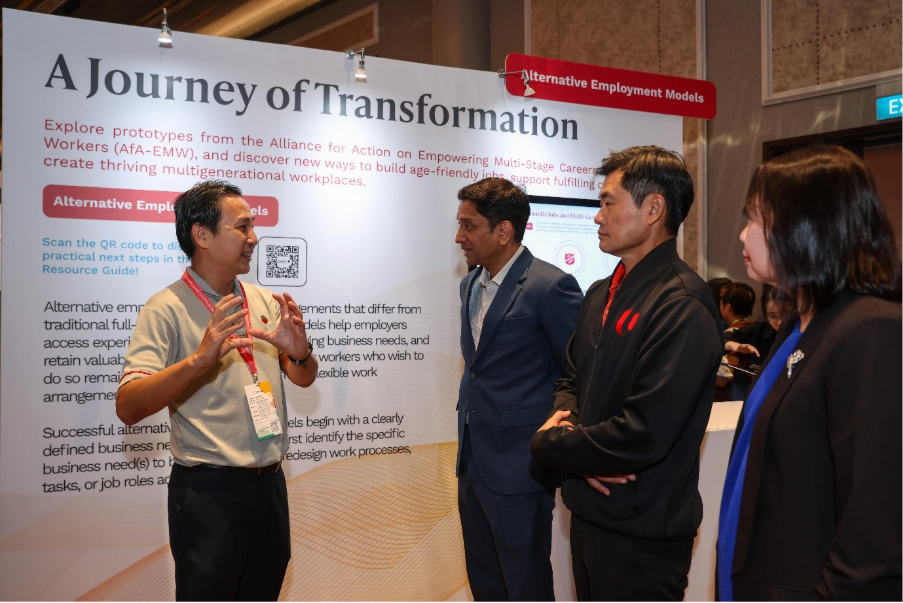
Mr Martin Ho, Director, Corporate Services, sharing our experience at the conference.
One lesson stood out: supporting mature workers goes beyond offering flexible hours.
Meaningful opportunities require thoughtful job design, clear expectations and support systems that meet both organisational and employee needs. When these come together, organisations can create pathways that benefit not only experienced professionals, but also the communities they serve.
A Shared Responsibility
We are grateful for the opportunity to contribute our experiences to the TWG-SE Report and AfA-EMW Resource Guide, helping to inform and inspire other organisations exploring age-friendly workplace practices and alternative employment models.
More importantly, this journey has reinforced a belief that sits at the heart of our work:
Experience should not be seen as something that fades with time. It is a resource that strengthens organisations, enriches communities and shapes future generations.
As Singapore’s workforce continues to evolve, perhaps the question for employers is not only why experienced workers leave.
It is also: What would encourage them to stay, return and continue making a difference?
At KKCS, we are proud to be part of this collective effort to build a more inclusive, resilient and age-friendly workforce where experience continues to matter, and where every individual has the opportunity to contribute, grow and make a lasting impact.

Related Coverage
- Singapore to raise retirement age to 65, re-employment age to 70 from 2029, CAN (video), 27 October 2026
- 8world News 2026, 8world News on mewatch (Chinese, video), 27 October 2026
- S’pore to raise retirement age to 65, re-employment age to 70 in 2029; expand flexi work for seniors, The Straits Times, 26 October 2026
- 试行分阶段退休等方案 一年来惠及逾1600名年长员工, 联合早报 (Lianhe Zaobao), 26 October 2026,
- Singapore sets retirement age at 65, re-employment at 70 from 2029, AsiaOne, 26 October 2026